
What is a .410 bore shotgun?
WOR ARMS team · ·
A .410 bore shotgun has a bore diameter of 0.410 inch (10.4 mm). It is the only common shotgun size named by inches instead of gauge. Converted to gauge it comes to about 67. In Türkiye the .410 is sold as "36 calibre", a trade name rather than a calculated gauge. Both names mean the same shell.
Is a .410 the same as 36 calibre?
Yes, the two names describe the same shell and the same bore. In Türkiye and some European markets the .410 is labelled "36 calibre". Wikipedia's .410 article calls this the "incorrectly labeled 36 gauge" used in Europe and South America. The number 36 does not mark a place on the gauge table. It is a habit that settled into the market.
Because Turkish buyers search for both "36 kalibre" and ".410", our Turkish pages write the two together as ".410 (36 kalibre)".
When you shop for shells, read the label with care. If a box says only "36", ask your dealer to confirm that the shell is a .410.
How is shotgun gauge calculated?
Gauge comes from the weight of a solid lead ball that fits the bore. If twelve such balls weigh one pound (453.6 g), the barrel is 12 gauge. The larger the number, the smaller the bore. By the 1855 table a 12 gauge bore is 0.729 inch (18.5 mm), and a 20 gauge bore is 15.6 mm. Modern barrels can differ from the table, with bores between about 18 and 20 mm sold as 12 gauge.
The .410 sits outside this system. It is named by its bore diameter in inches: 0.410 inch, or 10.4 mm. If you convert it with the gauge rule you get a figure near 67, but nobody uses that number in daily talk.
For comparison, the table gives 19.7 mm for 10 gauge, 18.5 mm for 12, 16.8 mm for 16, 15.6 mm for 20, 14.0 mm for 28 and 13.4 mm for 32 gauge. The .410 bore of 10.4 mm is smaller than every size in that list.
What shell lengths and shot loads does a .410 use?
The first .410 shells were 2 inches (51 mm) long. Today 2½ inch (64 mm) and 3 inch (76 mm) shells are sold. Wikipedia's examples put a 3 inch shell at about 21 g of No. 6 shot and a 2½ inch shell at about 14 g of No. 7½ shot. A slug load weighs about 7 g.
The size of the charge is the real difference between gauges. With 000 buckshot, a 2½ inch .410 shell holds 3 to 4 pellets where a 12 gauge shell holds 8. In 3 inch shells the figures are 5 against 10. For a fuller comparison with 12 gauge, read our 12 gauge vs .410 guide.
What does the shot number mean?
Bird shot is sold by number, and the larger the number, the smaller the pellet. In Wikipedia's table a No. 9 pellet is about 2.03 mm across and a No. 4 pellet about 3.30 mm. Ten grams of lead gives about 201 pellets of No. 9 but only about 47 of No. 4.
So two loads of the same weight can hold very different pellet counts. The shot number on the box matters as much as the grams. In a small .410 load the difference stands out more, because the total weight is limited to begin with.
What is a .410 used for?
Sources link the .410 with small game, pest control and clay sports such as skeet. Its light recoil makes it a common first gun for young hunters and beginners. The same sources note that the small shot charge and tight choke make hitting a target harder.
So the .410 gives gentle shooting and pays for it with fewer pellets. That balance explains why the size is both loved and argued over.
Wikipedia also records the .410 as a garden gun and as the shell in aircrew survival weapons such as the M6.
What .410 shell types exist and what is the range?
According to Wikipedia, a .410 loaded with shot suits small game and pest control. The market also offers buckshot (five 000 pellets in a 3 inch shell, three in a 2½ inch one), single slugs and combination loads. One combination example carries three 71 grain discs and twelve BB pellets together.
The sources give no single range for the .410. Distance depends on the shell type, the shot number and the choke, and the shot charge spreads after it leaves the barrel. So we publish no range figure; read the information from the maker of the shell you plan to use.
Which actions come in .410?
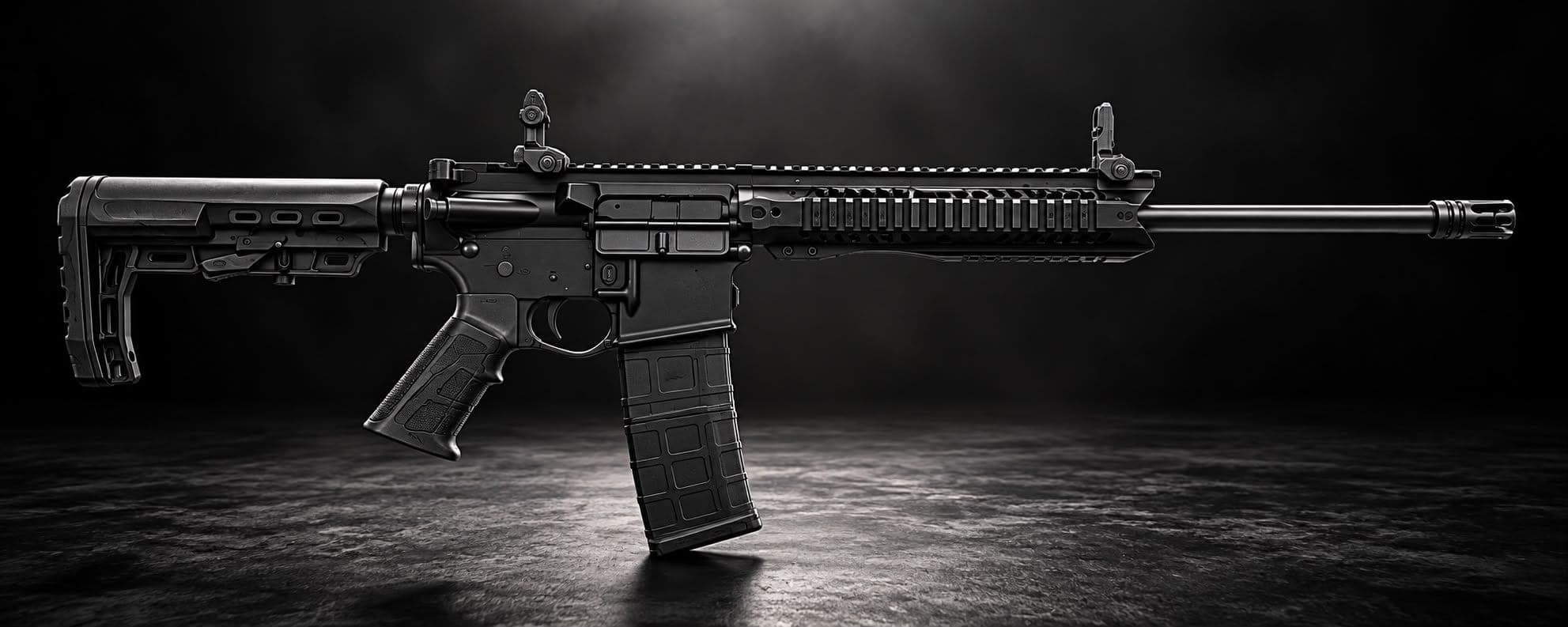
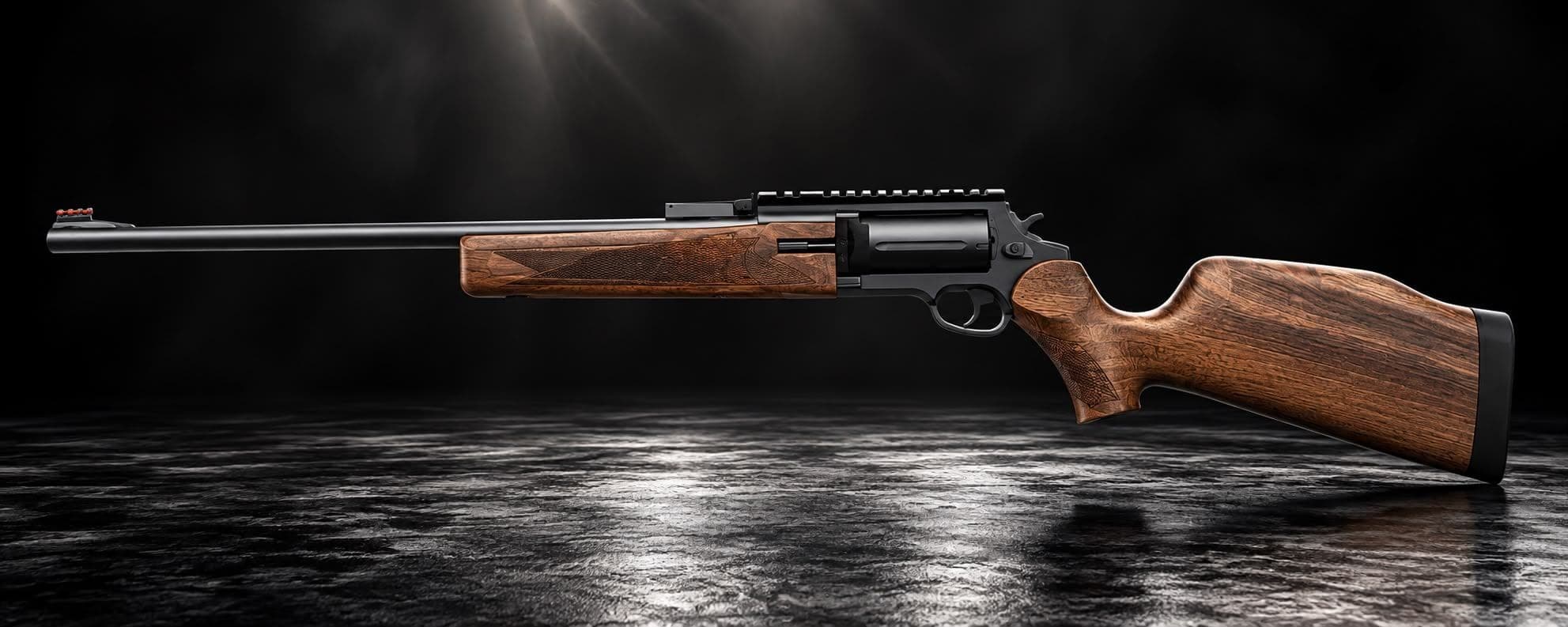
The same shell runs in different mechanisms: lever-action, revolver, semi-automatic, break-action and single-shot guns are all made in .410. The WOR ARMS collection has three .410 models: the lever-action WOR Lever Action .410, the revolver WOR Revolver .410 and the semi-automatic WOR Tactical .410. The technical details of these hunting shotguns sit on their own model pages.
We explain how the revolver action works in our revolver shotgun guide. Every figure for each model sits in the specifications table on its own page, and we publish verified values only.
Is the .410 found only in shotguns?
No. Wikipedia lists among the platforms that fire .410 shells revolvers with extended cylinders (the Taurus Judge, the Smith & Wesson Governor and the Magnum Research BFR), derringers, single-shot break-action guns such as the Snake Charmer, over-and-under combination guns such as the Savage Model 24, and Thompson/Center Contender pistols with .45 Colt/.410 barrels.
The legal class of these guns can differ from country to country. For the licensing status of any .410 gun, ask the competent authorities and your dealer.
Where can I check shell and bore dimensions?
The valid information is the stamp on your gun and its manual. Do not fire a shell longer than the chamber allows. For the standards themselves, two bodies are worth knowing. C.I.P. sets the proof rules for firearms and commercial ammunition in its member states. SAAMI publishes industry standards that include cartridge and chamber drawings.
Licensing, ownership and carrying rules are outside the scope of this guide. For those, ask the competent authorities and your dealer.
Sources
Related models

More guides
This article is general information, not legal advice. For licensing and rules, ask the competent authorities and your dealer. Sales are made only through authorised dealers.